Canva Craft: Canva's first image model is built for layouts, not photos
Canva has launched Craft, an in-house image model trained on its design templates. It plans a layout before rendering, outputs up to 2K, and is free to try in Dream Lab. The API is still a preview and per-image pricing is unpublished. Here is what that means for designers and developers.
October 22, 2026
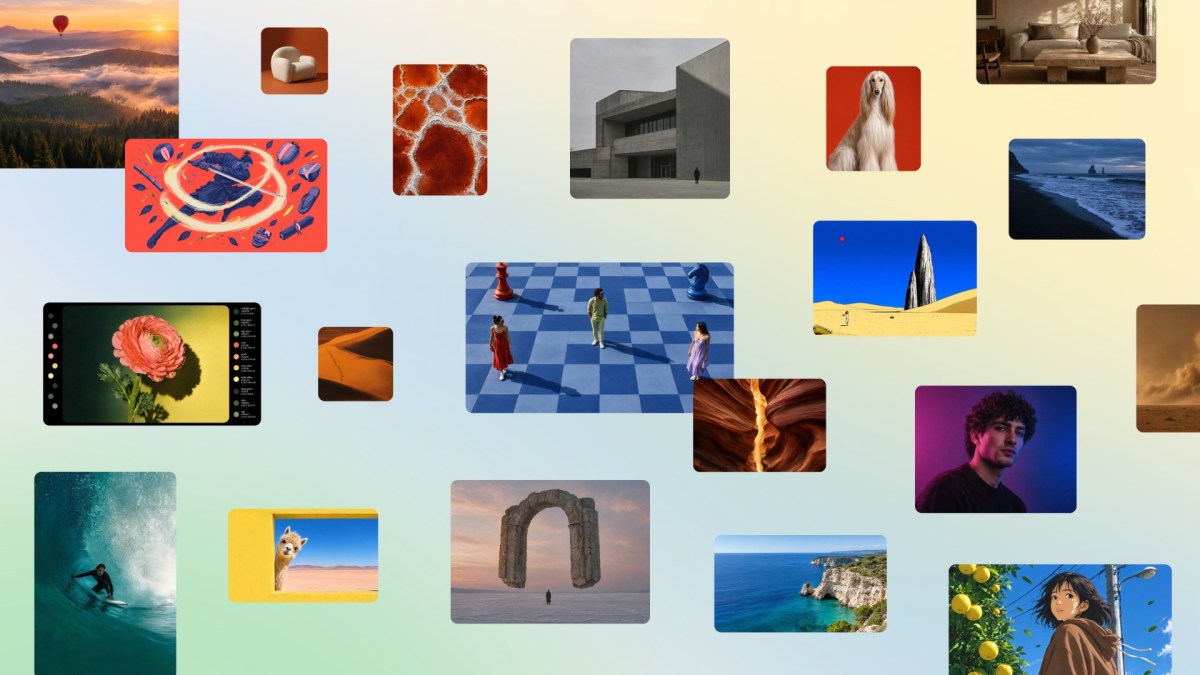
Canva has released its first in-house image generation model. Called Canva Craft, it was announced on October 22 and is available now to every Canva user worldwide through the Dream Lab tool, with a public API for developers. Its pitch is not photorealism but design: Canva says Craft was trained on its library of human-made templates rather than photo collections.
What Canva has confirmed
Based on Canva's announcement and reporting by TechCrunch:
- How it works: generation happens in two stages. Craft first plans the composition, including where text and objects go and how big they are, then a separate rendering stage produces the image from that plan.
- Output: images up to 2K resolution in more than 30 aspect ratios, with text rendered in 55 languages.
- Training data: posters, social posts, presentations, infographics, menus and typography-heavy layouts from Canva's own template library.
- Editing: you can make targeted edits without changing the rest of the image, and convert a generated image into a layered, editable design with Canva's Magic Layers.
- Where to use it: Dream Lab inside Canva, on all plans, and the Canva API.
- Coming soon: an MCP connection so assistants such as ChatGPT and Gemini can call Craft, plus cheaper, faster Craft-fast and Craft-ultrafast variants.
The model comes from Canva Research, which TechCrunch notes includes researchers from Leonardo.ai, the image generator Canva acquired in 2024.
How it ranks, and how far to trust that
Canva says Craft makes it the second most advanced lab for image generation on DesignArena, a crowdsourced ranking of AI design output. According to Tech Times, Craft debuted fourth among individual models on October 23 with an Elo score of 1,341. The three models above it are all from OpenAI: GPT-Image-2.5 Sunburst (1,406), GPT-Image-2.5 Flare (1,382) and GPT Image 2 (1,362). Below it were Reve 2.1, Microsoft's MAI-Image-2.6 and Google's Nano Banana 2.1.
Two caveats. Arena scores move as votes come in, and a day-one rank rests on a small sample. Tech Times also notes that no independent hands-on comparisons had been published when it wrote its piece. Treat the ranking as a reason to try Craft, not as proof it beats the tools you already use.
The fine print on pricing and the API
Canva has not published a per-image price for Craft. Tech Times reports that Dream Lab generations draw on your plan's AI allowance: free accounts get up to 20 combined AI uses a month, and Pro accounts up to 200 premium uses a month. Canva has not said which credit tier Craft uses, so the real cost per image on a paid plan is still unclear.
The API is also less finished than the headline suggests. According to Tech Times, it is a preview that "may change without notice," it is limited to 20 requests per minute, it offers six fixed aspect ratios instead of the 30-plus in the editor, and apps built on preview APIs cannot pass Canva's app review. That rules it out for public production apps for now.
There is also a business reason behind the launch. TechCrunch reports that Canva had $4 billion in revenue in 2025 but cut its 2026 forecasts, and Tech Times links that cut to the cost of paying third-party model providers. Running its own model turns that cost into Canva's own infrastructure spend.
What this means for you
- If you already design in Canva, Craft is the easiest test: open Dream Lab and try a poster, menu or social post with real text in it. Planned layout and legible text are where Canva claims the advantage, and the layered output means you can fix a headline without regenerating the whole image.
- If you use Midjourney for art direction or photographic work, there is no reason to switch yet. Craft is tuned for layouts, not mood boards, and Midjourney's plans start at $10 a month.
- If your work is text-heavy graphics, compare Craft with Ideogram, which has built its reputation on typography. Our Ideogram vs Midjourney comparison covers that trade-off.
- If you are a developer, wait. With preview status, a 20 requests per minute cap, no published pricing and no path through app review, the API is for experiments only. OpenAI's GPT Image models remain the safer API choice today.
Craft is a credible first model, and the template-trained approach is a real difference from photo-trained rivals. The open questions are cost and how it holds up in independent tests once the arena votes settle. We will update our image tool coverage as Canva publishes pricing.
Tools mentioned in this article
Some links in this article are affiliate links. Learn more.