ai-codeannouncementsai-trends
Claude Code Blocks or Charges Extra for OpenClaw Mentions
Claude Code appears to be restricting or charging premium rates for requests when commits reference OpenClaw, raising concerns about Anthropic's stance on the competing platform.
April 30, 2026
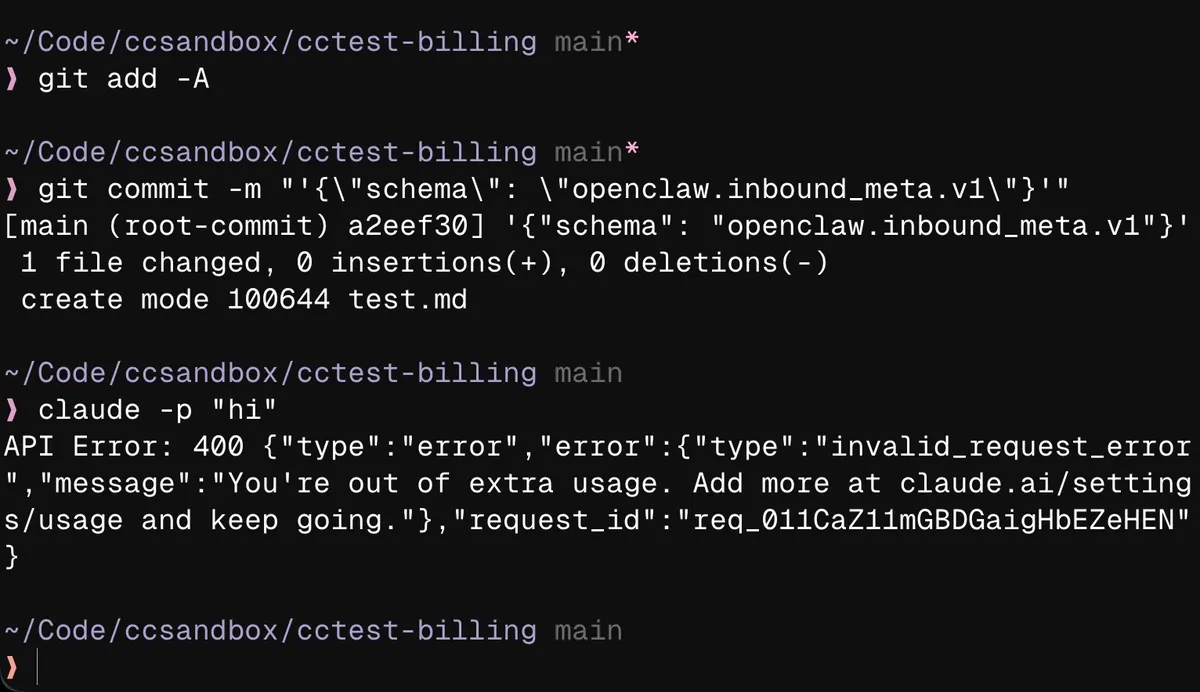
Are you running Claude Code on a codebase that has anything to do with OpenClaw, and suddenly finding requests blocked or priced differently than you expected?
That is not a billing glitch. It appears to be intentional behavior, and the implications for teams using Claude Code as a core part of their workflow are worth thinking through carefully.
What this is costing you, beyond the obvious
The reports surfacing on Hacker News and in Theo's thread on Twitter describe two distinct behaviors: outright refusals on certain requests when commit history or messages reference "OpenClaw," and what appears to be differential pricing or token consumption on those same tasks. Neither behavior is documented in Anthropic's public pricing or usage policy pages. The direct cost depends on your usage pattern. If you are on the Claude Code Pro plan at $100 per month, you are already paying a flat rate where surprise token inflation should not matter. But if you are on a usage-based API setup routing through Claude Code, unexpected compute charges on blocked or degraded requests can compound quickly. A team running 200 to 300 agentic tasks per day could see 10 to 15 percent of those tasks affected if their codebase has even incidental mentions of OpenClaw in commit messages, branch names, or code comments. The less obvious cost is time. Claude Code's value in an agentic workflow is that you do not babysit it. When it starts refusing mid-task or producing degraded output without a clear error, you lose that automation benefit entirely. The developer now has to re-examine what the model did, determine whether the output is trustworthy, and in many cases restart the task from a clean state. That is not a minor inconvenience. Depending on the task complexity, a single interrupted agentic run can cost 20 to 45 minutes of re-orientation. Migration risk is real here too. If you are deep into a Claude Code workflow, your prompts, your.claude configuration files, and your team's mental model of how to structure agentic tasks are all tuned to this specific tool. Switching to Cursor or GitHub Copilot is not a weekend project. The differences between Cursor and Claude Code in how they handle long context and multi-file edits are significant enough that a migration mid-sprint is deeply disruptive.
What people in the thread are actually saying
"It's refusing to help with anything in the repo if your recent commits mention OpenClaw. Not just related tasks. Everything." - comment from the Hacker News thread on Theo's postThat detail matters. The behavior being described is not targeted filtering of OpenClaw-specific functionality. It is a blanket degradation triggered by a string match on commit metadata. That is a meaningfully different kind of content policy enforcement than blocking a specific capability. Content policies in AI coding tools are not new. GitHub Copilot has had filters for years that block certain code patterns related to security vulnerabilities, and those filters are documented. What is different here is the apparent lack of transparency. If Claude Code is applying business-logic-driven restrictions based on competitive context, and doing so without surfacing a clear error message or policy reference, that is a trust problem independent of whether the restriction is legally or ethically defensible. The "charges extra" dimension is the stranger of the two reports. Differential token pricing based on the content of your commit messages would be a significant departure from how LLM billing normally works. It is possible what people are observing is increased token consumption from the model producing more cautious, verbose output on affected requests rather than deliberate pricing adjustment. The distinction matters, but the outcome is the same: you pay more for less useful work.
A concrete scenario: the mid-sprint discovery
Say you are a solo developer four days into a two-week sprint. Your codebase is a developer tool that competes in a similar space to OpenClaw. Three weeks ago, before you started using Claude Code heavily, you merged a branch calledfeature/openclaw-parity that implemented a feature your users had been requesting after seeing it in OpenClaw's changelog. That branch name is now in your git history.
You open Claude Code on Monday morning and ask it to refactor a completely unrelated authentication module. The model refuses, or returns a degraded response with no explanation. You spend an hour assuming it is a context window issue, a permissions problem with your repository connection, or a bug in your .claude configuration. It is not any of those things.
Once you identify the trigger, your options are uncomfortable. You can rewrite your git history to remove the branch reference, which is a destructive operation that breaks collaborators' local repos. You can rename your current working branch. You can try to route around the restriction by using a different model via the API and adjusting your workflow. Or you can switch tools.
None of those options are free. The git history rewrite takes time and coordination. Switching tools mid-sprint means your agentic workflows stop working until you rebuild them. Routing around via the API means losing the Claude Code interface layer that was the point of the subscription.
What to check right now
Run git log --oneline | grep -i openclaw in any repo you use with Claude Code. If you get hits, you may already be affected. Test a simple, unrelated request and compare the response quality and token usage against a baseline from a clean repo.
Where this leaves you if you depend on Claude Code
If this is relevant to your workflow, the earliest you could act on this productively is this week, specifically before your next agentic task run on any codebase with OpenClaw references in its history. The reason is simple: the cost of discovering this mid-task is higher than the cost of auditing now. Check your git logs, test your most common Claude Code tasks against a clean branch, and document the baseline behavior. If the restrictions hold and Anthropic does not clarify the policy publicly, the medium-term decision is whether to keep Claude Code as your primary agentic coding tool or treat it as one option among several. The Cursor versus Claude Code comparison has always been closer than it looks on the surface. A tool that behaves unpredictably based on undocumented triggers changes that calculation.Some links in this article are affiliate links. Learn more.