Claude identifies novel enzyme system. AI moves from text to real science.
Claude successfully discovered a previously unknown enzyme system with CRISPR-like repeats, marking a tangible scientific achievement and demonstrating AI's emerging capability in genuine research discovery beyond language generation.
September 24, 2026
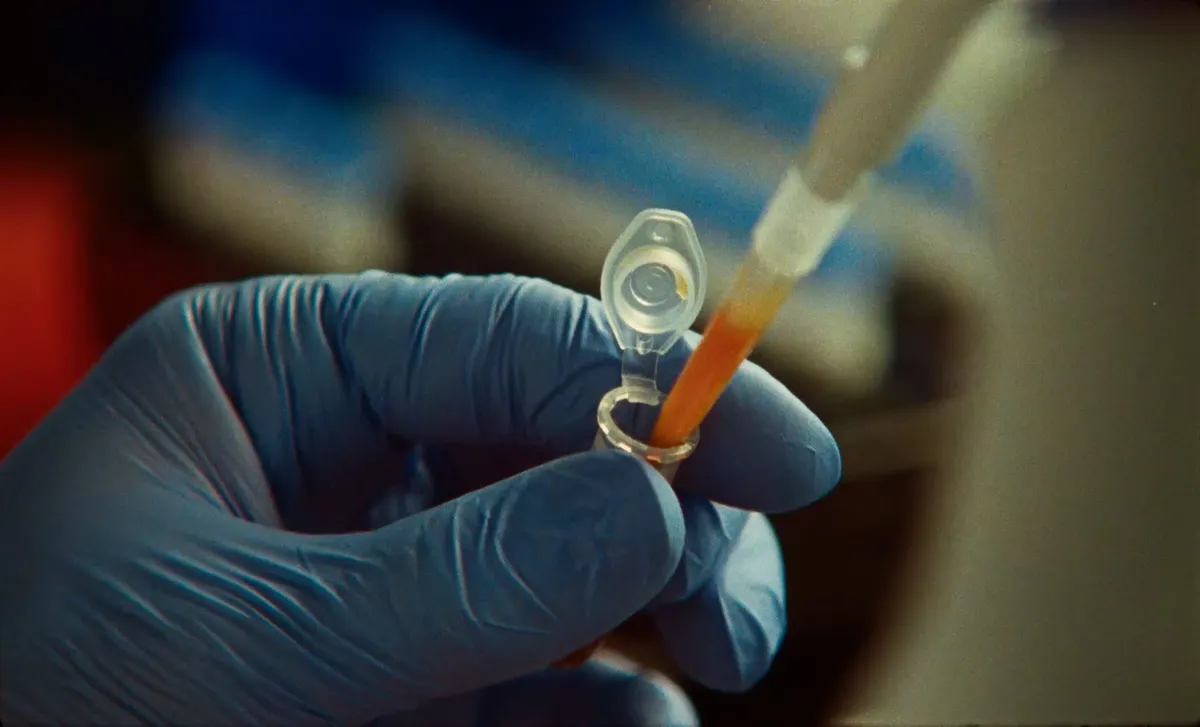
The detail that gets skipped in most write-ups of this story is not that an AI model found a new enzyme system. It is that, according to Anthropic's own account, the model was never told it was looking at biology in any meaningful sense. Claude was handed sequence data and asked to find structural patterns, the same kind of task it performs when it spots a repeated variable name across a thousand-line codebase. It found a repeat structure with CRISPR-like architecture that human annotators had walked past in public genomic databases for years, not because the pattern was hidden, but because nobody had pointed a system built to notice recurring structure at that particular haystack.
That distinction matters more than the headline. "AI discovers new biology" implies understanding. What actually happened, per Anthropic's announcement, looks more like a very good anomaly detector finding something worth a human's attention, which a research team then had to chase down and validate through actual lab work. Those are two very different claims, and the gap between them is where most of the skepticism in this piece lives.
Pattern recognition doesn't care what the pattern is made of
Large language models are trained to predict the next token in a sequence. That sounds like a narrow party trick until you notice that a lot of biology is also sequence data: repeated motifs, conserved regions, structural elements that recur across a genome the way a function signature recurs across a codebase. CRISPR arrays are, at a structural level, a series of near-identical repeats separated by variable spacer sequences. That is a shape a model trained on text patterns is well suited to notice, even if it has no concept of what a spacer sequence does biologically.
This is why the finding is plausible without being mystical. Researchers have used repeat-finding software like CRISPRDetect and CRISPRCasFinder for years precisely because this kind of structural regularity is detectable by algorithms that never touch a wet lab. What is new here is using a general-purpose model, not a purpose-built bioinformatics tool, to surface a candidate that a specialized pipeline either missed or never got pointed at. The value is not that Claude reasoned about enzymology. The value is that it did first-pass triage over a search space too large for a graduate student to eyeball, and flagged something worth the actual expensive step: bench validation.
That is also the limit of the claim. A repeat structure that looks CRISPR-like in a sequence alignment is a hypothesis, not a discovery, until someone confirms the enzyme actually does what the pattern suggests. Anthropic's post reportedly involved that confirmation step. The part worth remembering is that the confirmation, not the pattern-spotting, is what turns "interesting output" into "new biology."
Which tool you'd actually reach for on a task like this
If you are a researcher trying to replicate any part of this workflow, the model you pick depends on what you need it to do: hold long genomic context, cite sources honestly, or connect to actual databases instead of just generating plausible-looking text about them.
| Tool | Price (per 1M tokens, in/out) | Tool-use / retrieval | Where it fits in a research workflow |
|---|---|---|---|
| Claude (Opus 4.7) | $5.00 / $25.00 | Claude Connectors for external data sources | Long-document pattern comparison, structured sequence review |
| Gemini 3.5 | $1.50 / $9.00 | Native search grounding | Cheaper first-pass literature scanning, less suited to raw sequence work |
| ChatGPT (GPT-5.5) | $5.00 / $30.00 | Plugin and browsing tools | General reasoning support, drafting hypotheses to hand to a specialist tool |
For a lab already running a bioinformatics pipeline, none of these replace CRISPRDetect or BLAST. They sit upstream of them, as a way to notice something worth running through the real tools. For a solo researcher on a limited budget, Gemini's price makes it the reasonable first filter. For anyone doing the kind of long-context sequence comparison Anthropic describes, Claude's tool integrations make it the more defensible choice, at more than three times the cost.
Where this kind of claim usually falls apart
The documented failure mode with LLMs and scientific literature is not subtle: models fabricate citations that look completely real, down to plausible journal names, page numbers, and co-author lists that resemble real research groups. This has been reported widely enough in academic and library-science circles that several journals now require authors to disclose AI use specifically because of it. Apply that same failure mode to sequence analysis and the risk shifts from a fake citation to a fake pattern: a model asked to find "CRISPR-like repeats" has every incentive, structurally, to produce something that looks like one, whether or not the underlying sequence data supports it.
The practical failure looks like this: a researcher without deep genomics training runs a similar prompt on their own dataset, gets a confident-sounding answer describing a novel repeat structure, and treats it as a finding rather than a lead. Without the wet-lab step Anthropic's team apparently did, that output is a guess dressed in technical language. The gap between "Claude flagged this" and "Claude discovered this" is exactly the gap a non-specialist reader is most likely to miss, because the language in both cases sounds identical.
Why this might be less impressive than it sounds
Here is the skeptical case, stated plainly: this is a single result, announced on the company's own blog, without independent replication cited in the summary available to the public. Anthropic has an obvious commercial interest in a story that reads as "our model does real science," and there is no mention here of an outside lab confirming the finding before the announcement went out. Extraordinary claims about AI systems doing novel scientific work have a track record of not surviving contact with peer review. Google's DeepMind faced pushback on similar framing after its algorithm-discovery claims were scrutinized by outside mathematicians who found the "new" results were less novel than the announcement implied.
There is also a simpler explanation available that gets skipped in the excitement: existing repeat-finding software might have surfaced this same pattern if pointed at the same dataset. Nobody in this story mentions running that comparison. A model finding something a specialized, cheaper, purpose-built tool would likely have also found is not evidence of general scientific reasoning. It is evidence that pattern-matching works, which nobody disputed. The interesting claim, that a general-purpose language model contributes something a domain tool could not, is the one this announcement does not actually prove. Treat "Claude discovers" as marketing language until an outside lab publishes a confirmation independent of Anthropic's own writeup.
If you want to try a version of this yourself
You do not need lab access to test whether an LLM can spot structural patterns in sequence data. You need a public dataset and a way to check the model's output against a real tool, not against your own intuition.
- Pull a public genomic dataset from a source like NCBI's sequence database, in FASTA format, small enough to fit in a single context window.
- Run it through an established repeat-finder first, using something like
CRISPRCasFinderorminced, and record what it finds before you touch an LLM. - Prompt Claude or Claude Code with the same sequence, asking specifically for repeat structures and their spacing, without mentioning CRISPR by name, to avoid leading the model toward the answer you expect.
- Compare the two outputs side by side. Flag any claim the model makes that the specialized tool did not also surface.
- Do not treat a mismatch as a discovery. Treat it as a question for someone with actual genomics training, the same way Anthropic's team apparently did before publishing.
Verification test: if the model's flagged pattern does not appear in the output of the dedicated repeat-finder run on the identical sequence, you have a hallucination, not a lead. That single check is the difference between a fun weekend experiment and a claim you should be embarrassed to repeat at a conference. Run it before you cite anything an LLM told you about a genome, this week or any other.
Tools mentioned in this article
Some links in this article are affiliate links. Learn more.