GPT-6 is in every ChatGPT plan now. Free gets Luna, paid gets Sol, and the gap is easy to miss.
OpenAI rolled GPT-6 and its new interactive 'Intelligent UI' out to every ChatGPT tier this week, but free users and subscribers get different models. Here is what each plan actually gets and whether Plus is still worth $20.
October 9, 2026
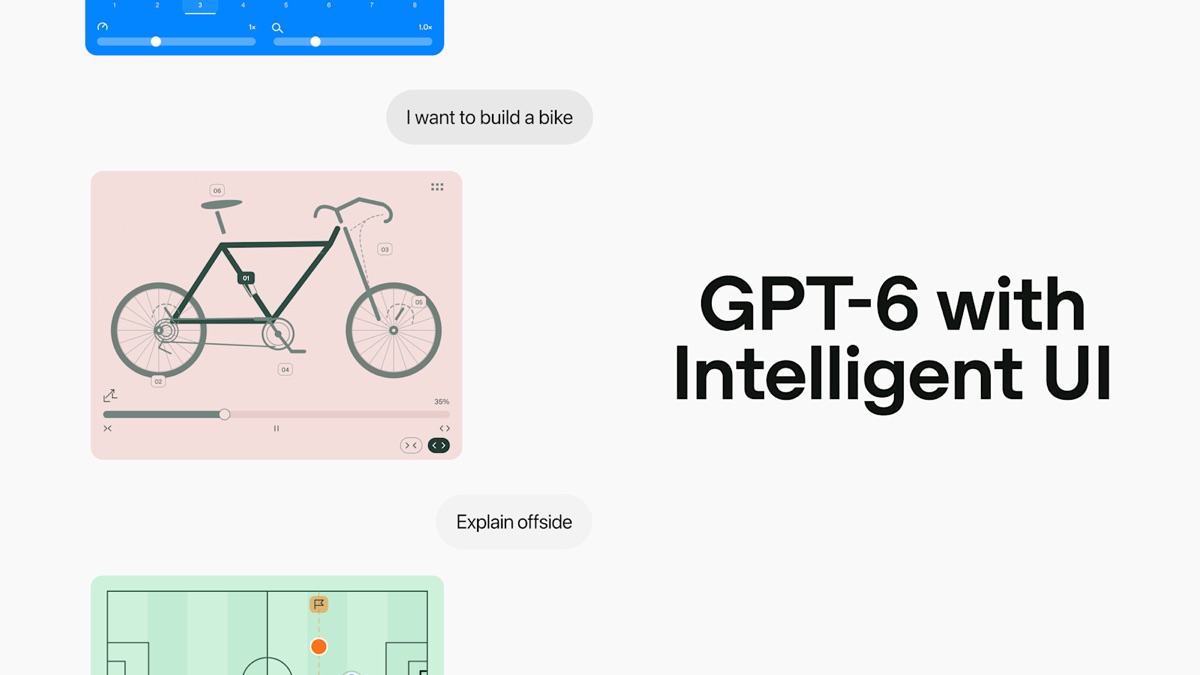
OpenAI began rolling GPT-6 out to everyone who uses ChatGPT this week, together with a new feature it calls Intelligent UI. Paid subscribers got it on October 7 and Free and Go users from October 8, according to OpenAI's own announcement. OpenAI says ChatGPT now reaches more than 1.2 billion people a week, which makes this the widest model upgrade it has shipped.
The headline says "GPT-6 for everyone", but free users and subscribers are not getting the same model.
Who gets which GPT-6
| ChatGPT plan | Model in the Chat tab | API price of that model (per 1M tokens) |
|---|---|---|
| Free and Go | GPT-6 Luna | $0.10 in / $0.50 out |
| Plus, Pro, Business, Enterprise | GPT-6 Sol | $2 in / $10 out |
OpenAI describes both as tuned for everyday conversation. The change applies to the Chat tab only; OpenAI says the models behind Work and Codex are unchanged. Enterprise access depends on admin settings.
The API prices are the clearest signal of the difference. Sol costs 20 times more than Luna per token, and OpenAI rarely prices models that far apart unless they are far apart in capability. Luna is a strong small model: Artificial Analysis scores it 38 on its Intelligence Index, the same score it gives Mistral's new trillion-parameter Large 4. But Sol is the model that does the heavier reasoning, and free users should not expect Sol-level answers on hard problems.
What Intelligent UI does
The bigger visible change is that answers can now include interactive elements instead of just text. OpenAI's examples include an interactive breakdown of a bicycle's parts, a roast-dinner plan with a quantity calculator that adjusts to your guest count, savings calculators, a bill splitter, maps, simple games and multiple-choice follow-up questions. Intelligent UI works on both Luna and Sol, so free users get it too.
"GPT-6 can answer while it is still thinking." - OpenAI
That second change matters for everyday use. OpenAI says GPT-6 gives a useful first response and then keeps reasoning and adding detail, and that on its highest thinking setting it starts answering about as fast as GPT-5.6 did on a medium one. For web-search questions, it says the fastest setting starts answering 44% sooner than its predecessor.
Two caveats from early coverage. A polished chart or calculator can still contain wrong numbers, so check anything you will act on. And OpenAI itself says "work remains ahead to improve the model's design judgment," so expect the interactive answers to be uneven for a while.
Is ChatGPT Plus still worth $20?
For light users, the free plan just got noticeably better: GPT-6 Luna plus Intelligent UI covers everyday questions, drafting and planning. OpenAI has not published GPT-6 message limits for the free tier, so heavy users will still hit walls.
Plus is worth it if you rely on ChatGPT for work that needs real reasoning: analysis, long documents, research and coding help. That is where Sol's advantage over Luna shows. The comparison has also shifted outside OpenAI. Google just cut free Gemini to its smallest model, while Claude's free plan still includes web search, file analysis and Artifacts. If you are choosing a single paid assistant, our ChatGPT vs Claude and ChatGPT vs Gemini comparisons cover where each one leads, and the Tool Finder narrows it down in five questions.
Some links in this article are affiliate links. Learn more.