OpenAI releases GPT-5.6. Reasoning and coding get the upgrade.
OpenAI's latest model iteration brings improved reasoning capabilities, enhanced coding features, and stronger deployment safety measures. The update marks another step forward in the competitive landscape of large language models.
July 12, 2026
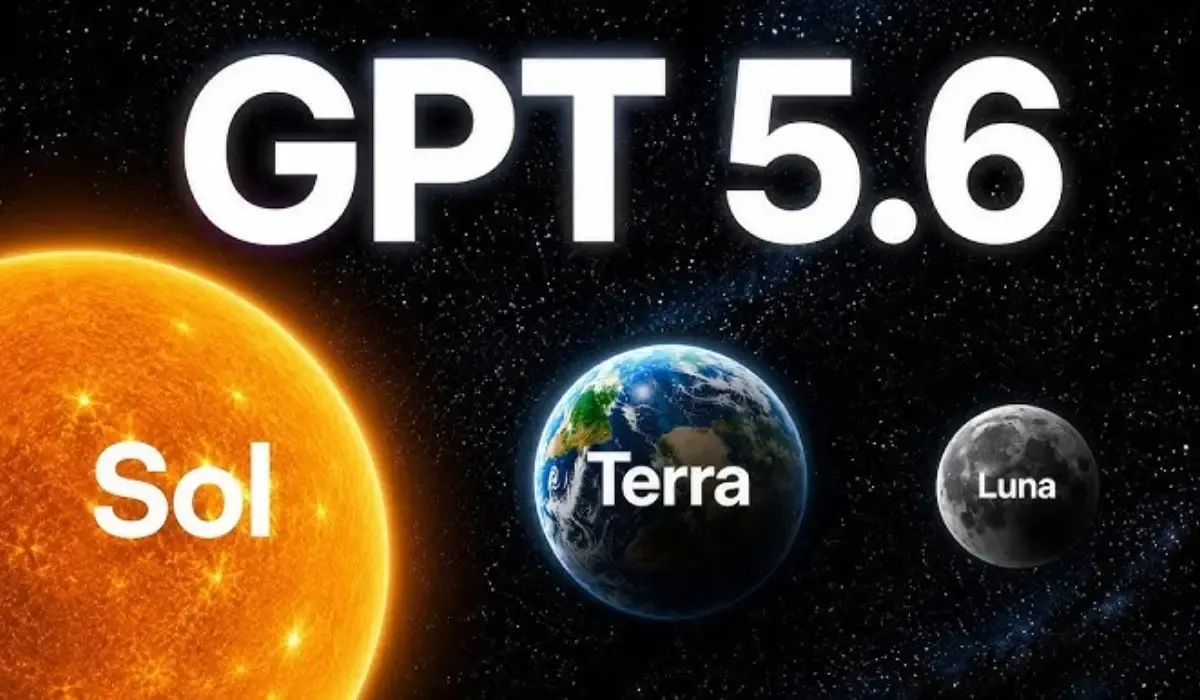
Three major OpenAI model releases landed between March and July 2026. GPT-5.4 in March, GPT-5.5 in April, GPT-5.5 Instant in May, and now GPT-5.6 in July. That cadence, roughly one significant model update every six to eight weeks, is not accidental. It reflects a specific competitive pressure: Anthropic shipped Claude Sonnet 5 in June, Google DeepMind shipped Gemini 3.5 in May, and DeepSeek dropped V4 and V4 Flash in April. OpenAI is not setting the pace so much as matching it.
What the Hacker News thread picked up that the press release did not
The announcement drew the usual mix of skepticism and curiosity on Hacker News. One comment that surfaced near the top captured the friction many developers feel right now:
"At what point do we stop calling these releases and start calling them patches? GPT-5.4, 5.5, 5.5 Instant, 5.6 Sol, now 5.6 - I've lost track of which one I'm supposed to be benchmarking against."
That is a fair complaint, and it points to a real problem in the current landscape. The version numbering across providers has become close to meaningless for anyone who does not follow this space obsessively. GPT-5.6 Sol shipped in June. GPT-5.6 shipped in July. Whether those are meaningfully different models or variants of the same checkpoint, optimized for different deployment contexts, is not something you can determine from the name alone.
What the announcement does confirm: improvements to reasoning, coding capabilities, and deployment safety features. That framing matches the pattern across recent OpenAI releases. Coding improvements are measurable and defensible. Safety features are harder to evaluate from the outside but increasingly important for enterprise procurement decisions. Reasoning improvements are the claim that requires the most scrutiny, because "better reasoning" can mean anything from improved multi-step logic to fewer confident wrong answers, and those are not the same thing.
The pricing number that anchors the decision
$5 / $30
GPT-5.6 input/output per 1M tokens
GPT-5.6 is priced at $5.00 per million input tokens and $30.00 per million output tokens. That is the same price point as GPT-5.5, GPT-5.5 Instant, GPT-5.6 Sol, and Claude Opus 4.8. At the frontier tier, pricing has effectively converged. The differentiation is no longer on cost.
Consider what that means if you double or halve the output price. At $15 per million output tokens, GPT-5.6 would sit alongside Claude Sonnet 5 and GPT-5.4, which are both positioned as the capable-but-not-flagship tier. At $60, it would be in o1 territory, which commands that premium specifically because of its extended reasoning architecture. At $30, OpenAI is saying this model belongs in the same conversation as the current flagships across providers - and the burden of proof falls on benchmarks and real-world testing, not on price.
For teams currently running GPT-5.5 or GPT-5.4, the migration math is simple: no cost change if you're already on the $5/$30 tier, potential cost increase if you're on the $2.50/$15 GPT-5.4 tier. That is not a trivial consideration for high-volume deployments. A team pushing 50 million output tokens per month would see their bill go from $750 to $1,500 by upgrading from GPT-5.4 to GPT-5.6. The improvement in output quality needs to justify that delta before the switch makes sense.
A concrete scenario: a coding assistant pipeline mid-flight
Take a team building a coding assistant on top of the OpenAI API. They integrated GPT-5.4 in March when it shipped, tuned their system prompts around its behavior on code review tasks, and have been running it in production since. They are now deciding whether to upgrade to GPT-5.6.
The relevant questions in that scenario are not abstract. They are:
- Does GPT-5.6 produce fewer hallucinated function signatures on the codebases they work with?
- Does it handle longer context windows without degrading on the tail of the input?
- Does the "deployment safety" improvement change the model's behavior on edge cases their users hit regularly?
- At $30 per million output tokens versus $15 for GPT-5.4, does the quality gap cover the cost gap at their volume?
None of those questions can be answered from the announcement alone. The right move for that team is to run GPT-5.6 on a sample of their historical eval set before touching production. Tools like Cursor or GitHub Copilot, which sit above the raw API and abstract away the model version for end users, face a different version of the same problem: their backend model choices now carry real cost implications that compound across millions of user interactions. See also our Cursor vs. GitHub Copilot comparison for how each handles model selection at the product level.
The safety feature improvements are worth watching separately. Enterprise procurement teams treat safety features as a procurement checkbox, but they also change real model behavior in ways that can break existing prompts. A system prompt that worked around a previous limitation may behave differently when that limitation is removed or modified. That is the less-discussed migration risk: not that the model gets worse, but that it gets different in ways your existing eval set was not designed to catch.
For teams evaluating where GPT-5.6 fits against the current field, the ChatGPT vs. Gemini comparison covers the broader positioning question between OpenAI and Google's current offerings. And if you're tracking the cost side across the post-consolidation landscape, our piece on reducing LLM costs at the Opus tier covers the tradeoffs in more detail.
The question this release leaves clearly open: at what point does OpenAI's rapid versioning cadence start working against adoption rather than driving it? Enterprise procurement cycles are not six weeks long. If GPT-5.7 or a 5.6 variant lands before a team has finished evaluating 5.6, the rational response is to stop evaluating and wait for the dust to settle. Whether that is what OpenAI intends is unclear.
Some links in this article are affiliate links. Learn more.